Earlier work / Drivetrain / Battery
A longboard that still feels like one, with two motors underneath.
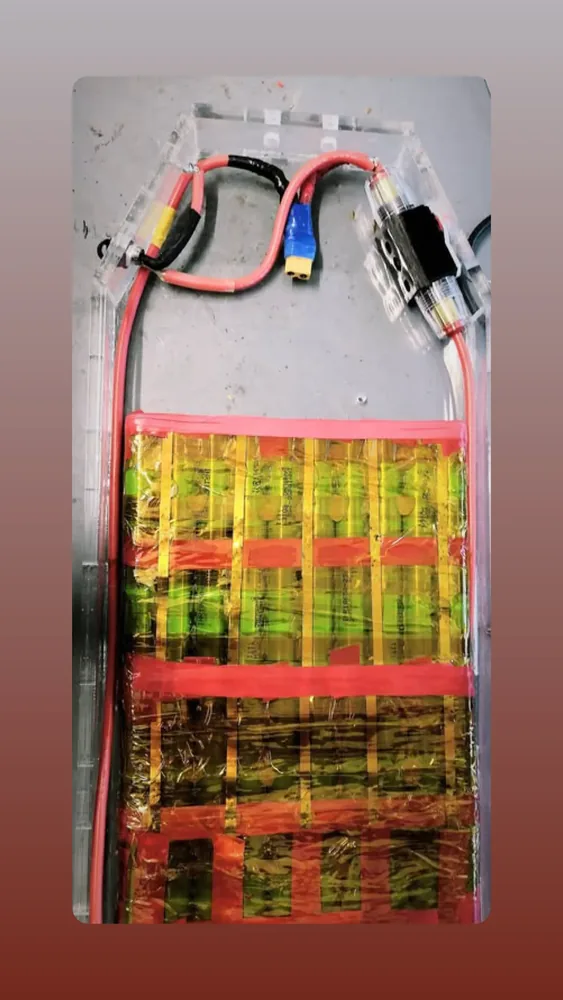
I built it as a student in Enschede: two belt-driven motors, a 40-cell battery pack I spot-welded by hand, and the electronics, all in the space under the deck.
It has had lights since the police stopped me.
My workThe build: drivetrain, battery pack, wiring and enclosure
WhenSince 2019, as a student at the University of Twente
Decision / Packaging
Everything had to fit under my feet.
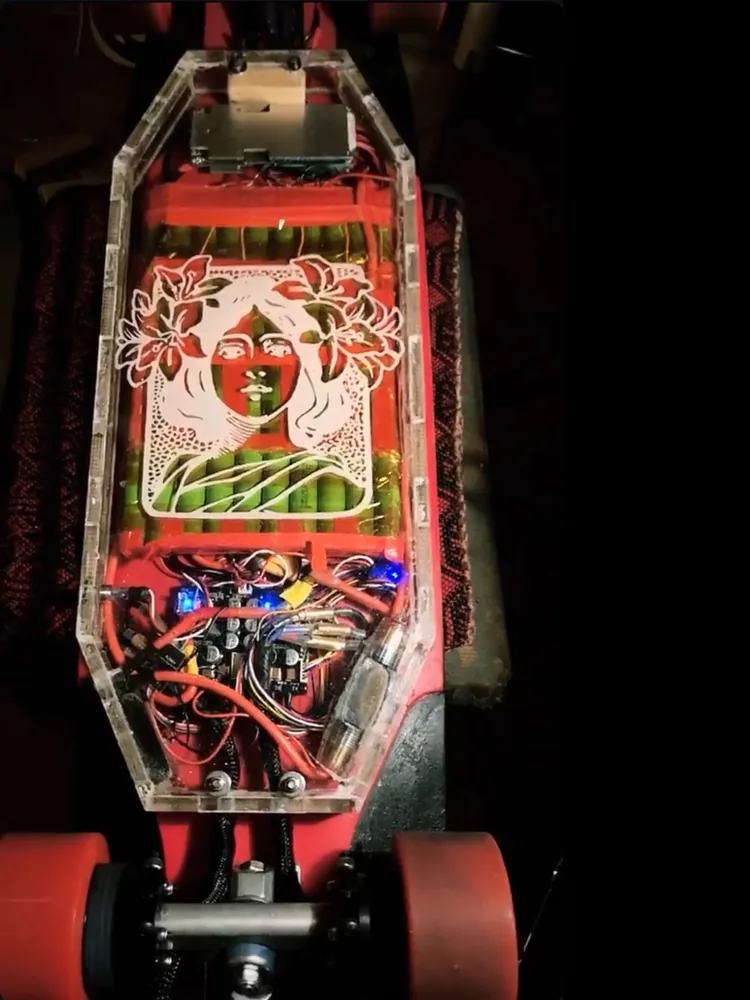
Drivetrain, battery, controller and enclosure all share the space under the deck.
The pack is ten groups in series, each of four cells in parallel (10s4p): 40 cells joined with nickel strip that I spot-welded by hand. A laser-cut, engraved acrylic cover closes the electronics.
- Power
- Two belt-driven outrunner motors, rated at about 4 hp together
- Pack
- 10s4p, 40 cells, spot-welded by hand
- Control
- Flipsky VESC · 2.4 GHz remote
- Protection
- Fused charge and discharge rails · XT90 anti-spark connectors, which reduce arcing when the pack is connected
Failure / Telemetry
A short in the controller burned out the battery management system.
As I remember it, a short in the VESC drew a surge of current from the battery, more than the battery management system could survive. I replaced it.
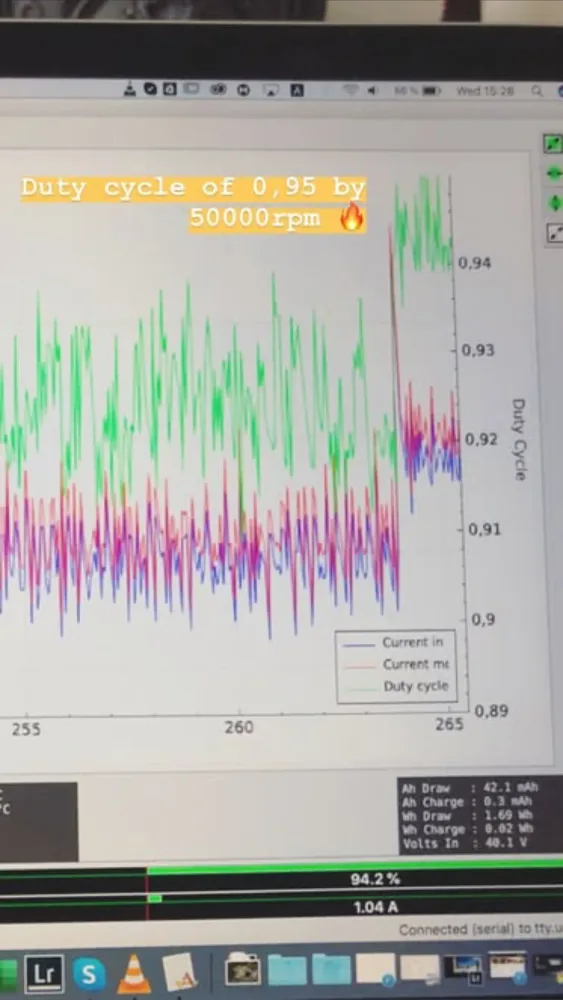
The controller reports duty cycle, motor current and battery current, which I log over serial to see where the drivetrain sits under load.
The board kept changing through use: new motors, a smart switch, a replaced battery management system, and lights after a police stop.
Sources: the build photographs, the VESC Tool screenshot and the ride clip. The police stop, the short and the later changes to the board are my own account. The motor power is the motors’ rating, not a measurement.